
Custom 3D Modeling for 3D Printing
Real Parts, Real Photographs, Real Numbers — Or Nothing.
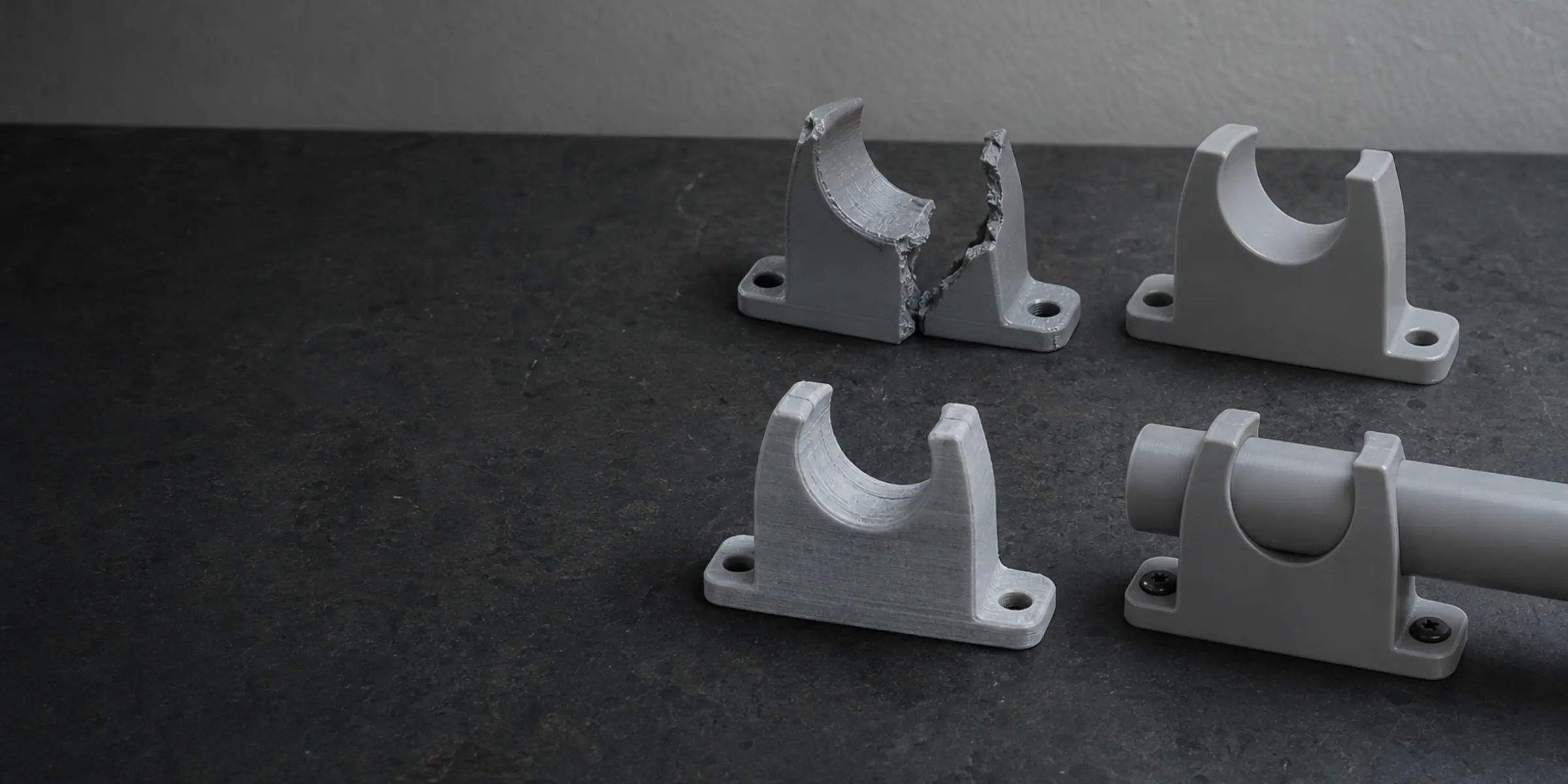
There are no customer case studies on this page yet, and we are not going to invent any. What we can show you is the format every project is recorded in, so you know exactly what you will be able to judge when the first ones are published. Each case has four images, taken the same way every time: the part before it broke or as it arrived with us, the CAD model we built, the printed part, and the part installed and working. Those four images, shot from the same angle, in the same light and at the same focal length, are the whole argument. The rest of this page describes the rules we hold ourselves to when a project is published.
The four images every case uses
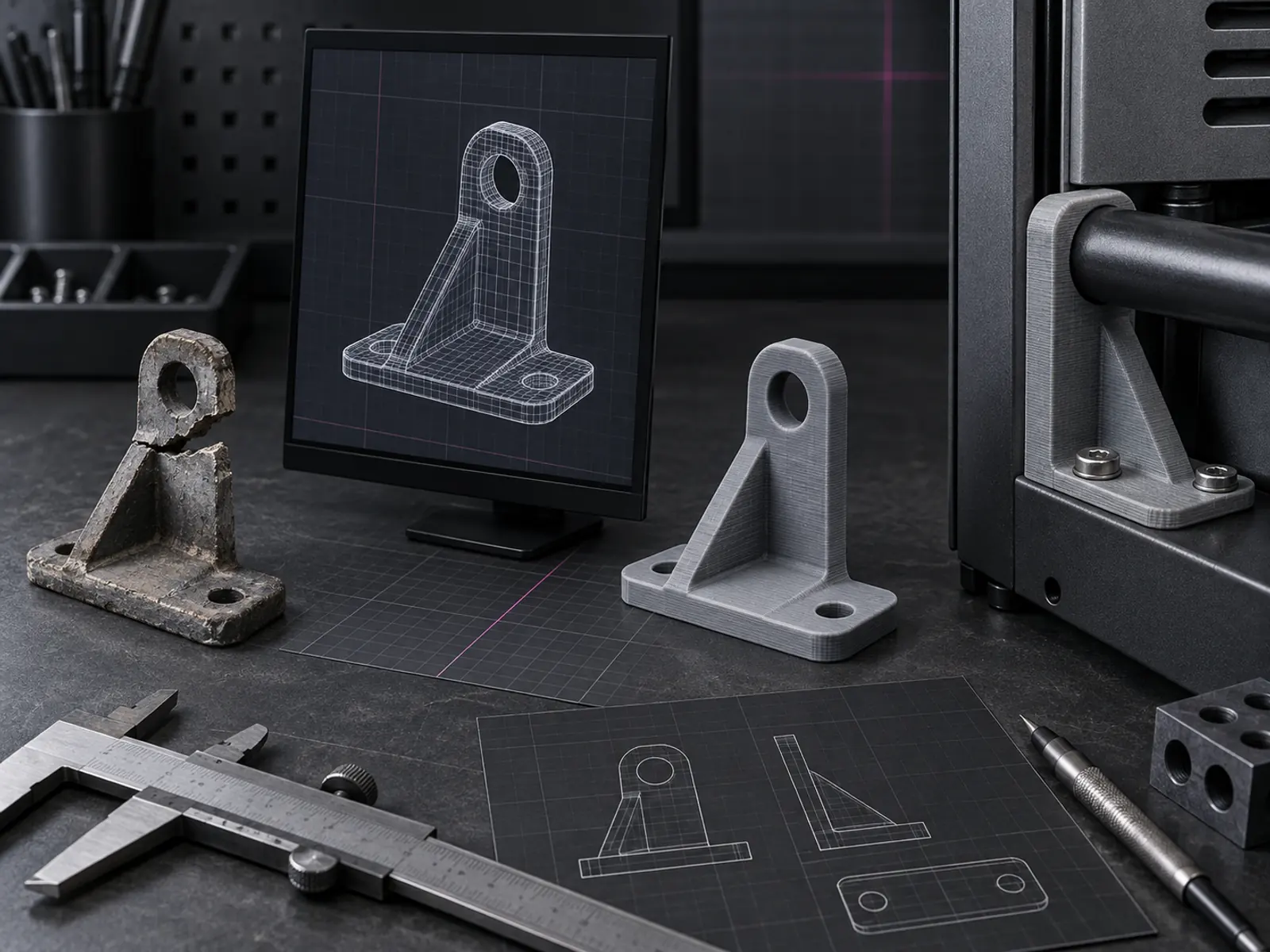
Every project we document follows exactly the same sequence, because a before-and-after only proves something when nothing else has changed. The four images are the part before, the CAD model, the printed part, and the part installed and working.
- The part before — the broken, worn or missing original, photographed where it sits, with every fragment in frame, including the pieces that look too small to matter.
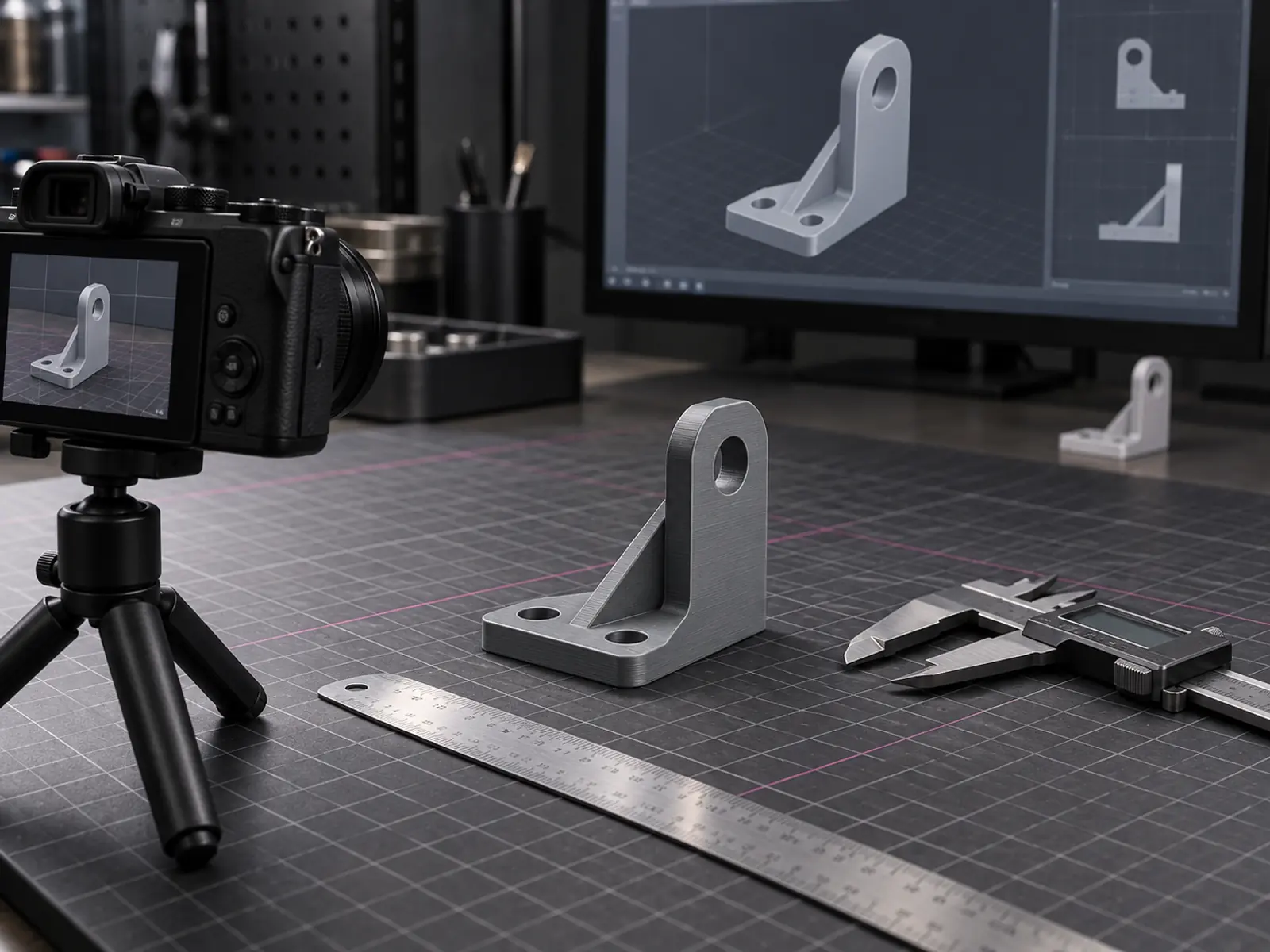
- The CAD model — the same view of the model we built, on a plain background, so the geometry can be compared with the original rather than admired.
- The printed part — the same view again once it has been printed, before any finishing or lighting flatters it.
- Installed and working — the part in its final position, doing the job it was modelled for.
Why the four photographs have to match
If the four images are taken at different angles, in different light or with different lenses, the comparison proves nothing at all. A part photographed from above and then from the side looks different even when it is identical, and the viewer cannot tell a real improvement from a change of camera position.
So the rule is fixed: same angle, same light, same focal length, and the same reference object in frame for scale. It is a boring rule, and it is the only one that makes a documented project worth reading. It also means a case cannot be dressed up after the fact — either the part fits, or the photograph shows that it does not.
Nothing is cropped to hide a gap, nothing is retouched, and no image is replaced with a render presented as a photograph. If a first attempt had to be revised, the revision is part of the record.
Publication and confidentiality rules
- A project is published only after the customer has given written permission.
- We publish real photographs we took ourselves and real measurements — never purchased images, never estimated results.
- If permission is not given, the project stays private, including every photograph of it.
- Client names, company names and identifiable part details are not published, even when the project itself is.
- A customer can ask for a published case to be taken down at any time, and it is removed.
- We will sign a confidentiality agreement before files or photographs are exchanged, whenever a customer asks for one.
What a case entry will contain
The same fields will be completed for every project, so two cases can be read side by side.
| Field | What it records |
|---|---|
| Industry | Where the part belongs — for example equipment repair, electronics, workshop tooling, or non-safety automotive interior trim. |
| Input type | What the customer could supply: photo, sketch, broken part, existing STL or STEP, a physical part to measure, or a written description of an idea. |
| Part count | How many parts had to be modelled, and whether they had to fit each other. |
| Difficulty | What made the job hard: unclear interfaces, missing dimensions, thin walls, a shape that had to be measured rather than drawn, or a file that would not slice. |
| Solution | What was built, how the geometry was established, and which print process, orientation and material were chosen. |
| Result | What happened when the part was fitted and used, described as it was observed rather than as a claim. |
| Publishable photos | Which of the four images the customer has cleared for publication, and which ones stay private. |
The first case could be yours
Until real projects are cleared for publication, this page stays a description of the format rather than a gallery of invented work. If you would like your project documented this way — four matched photographs and a plain description of what was modelled and why — say so when you send it, and we will ask for the permissions at the same time.
If you would rather stay anonymous, that is the default anyway. Documenting a project and publishing it are two separate decisions, and you make the second one only if you want to.
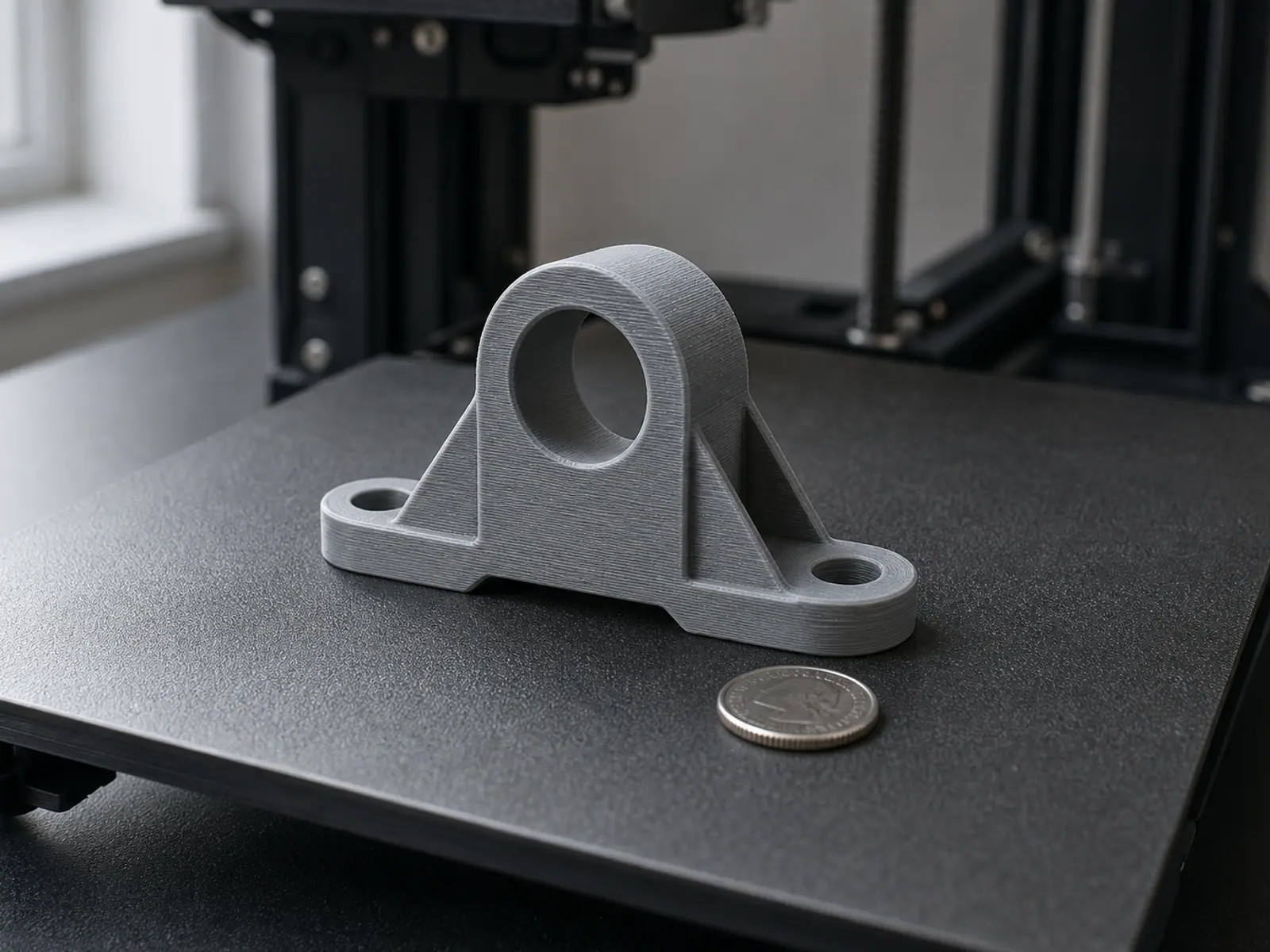
We publish a project only with the customer's written permission, and only with the real photographs and real numbers.
Related services
Frequently asked questions
Frequently asked questions
Why are there no example projects on this page?
What will a published case actually show?
Will my project be published if I do not want it to be?
Can I see examples privately before I commit to a project?
Do you sign non-disclosure agreements?
How do you decide whether a project counted as a good result?
Real Parts, Real Photographs, Real Numbers — Or Nothing.
There are no customer case studies on this page yet, and we are not going to invent any. What we can show you is the format every project is recorded in, so you know exactly what you will be able to judge when the first ones are published. Each case has four images, taken the same way every time: the part before it broke or as it arrived with us, the CAD model we built, the printed part, and the part installed and working. Those four images, shot from the same angle, in the same light and at the same focal length, are the whole argument. The rest of this page describes the rules we hold ourselves to when a project is published.