Custom 3D Modeling for 3D Printing
An STL Built for Your Printer, Not Just for the Screen.
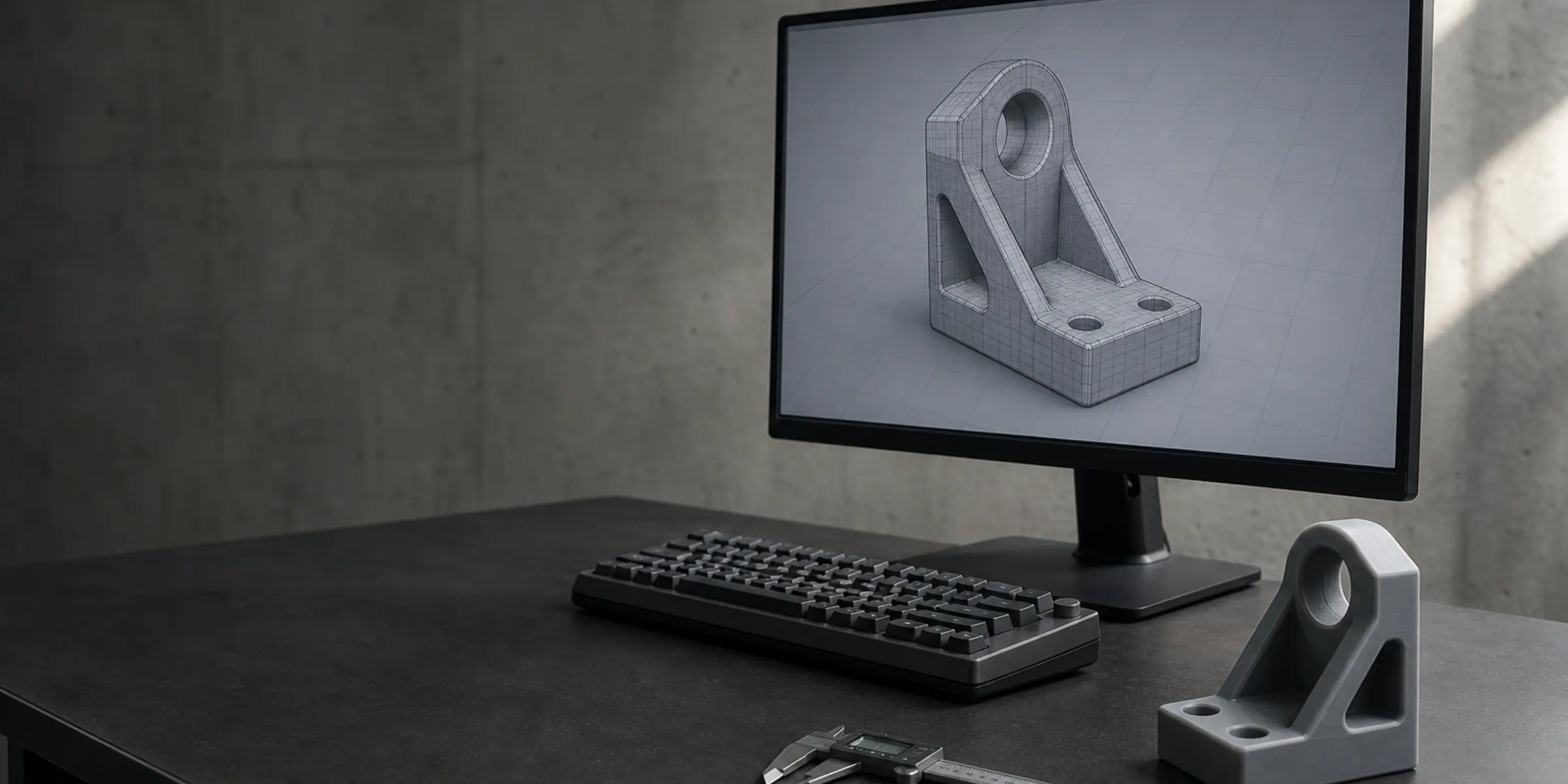
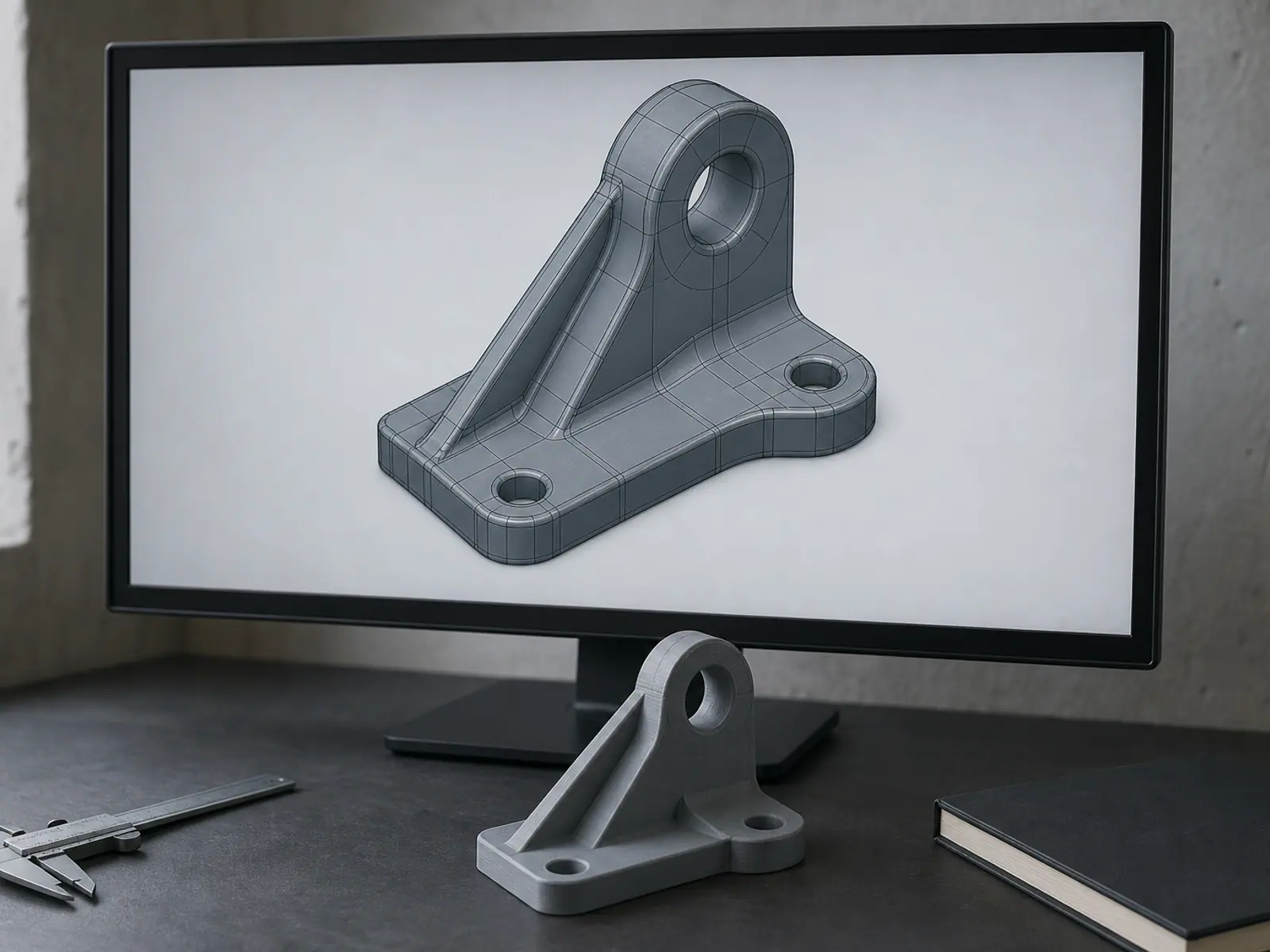
An STL is a mesh: a surface made of triangles with no dimensions, no units and no feature history. That is why it prints but cannot easily be changed. When you commission a custom STL from us, you get a mesh that is watertight, correctly scaled and oriented for the print process — and where the part will need changes later, we keep it as a solid CAD model as well, so a hole can be moved without rebuilding everything. You can start from a drawing, a photo, a description of what the part has to do, or a rough model you already have. Tell us the printer, the material and the load the part carries; those three answers change wall thickness, orientation and clearances more than any other detail.
What an STL is, and what it is not
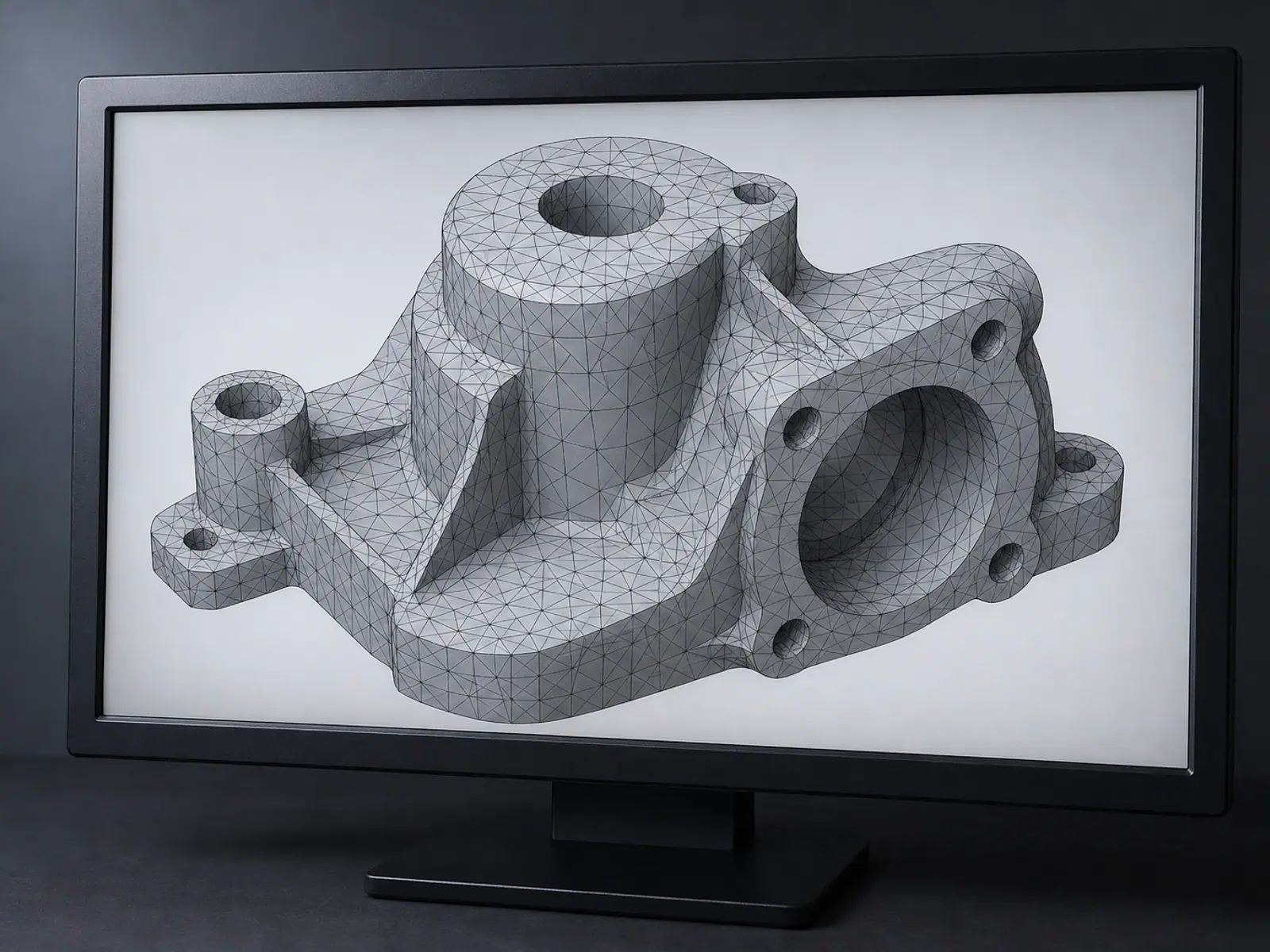
An STL stores one thing only: the shape of a surface, as a grid of triangles. It has no unit, no datum, no thread callout and no way to say that one hole must line up with another. Slicers accept it because printing only needs a surface. Every later change — a wall made thicker, a boss moved two millimetres, a clearance opened up for a press fit — is harder, because there is nothing left to parametrically edit.
That difference decides which deliverable you should ask for. If the part is finished, a clean STL is enough. If you expect the design to keep moving, ask for the solid model as well: STEP and an editable native file can be re-dimensioned in minutes, while a mesh has to be rebuilt. Both are available here, and the choice is made at quoting time rather than at the end.
What we need before modelling starts
- The purpose of the part in one sentence, including the load it carries or the force it resists.
- At least one hard dimension, so the model has a real scale rather than a plausible one.
- The printer or process it will be made on, and the material, if you already know them.
- The mating surfaces — the faces, holes and bores that touch other parts, with their sizes.
- Any hard limit on the outside: the space it has to fit inside, and the direction it slides in.
- Whether you want the editable source, a printable mesh, or both.
The jobs customers describe, and what each one actually involves
Most people looking for an STL design service are not sure whether they need modelling, conversion or repair. The table below maps the plain-language request to the work it usually means, so the first reply can be useful instead of a request for more information.
Request to scope
| What you describe | What it usually means | What to send |
|---|---|---|
| Make me an STL of this part | A single part modelled from scratch and oriented for printing | Sketch or photos, plus two or three measured dimensions |
| I have a mesh but no CAD | Mesh converted into a solid model that can be dimensioned and edited | The mesh file, plus the sizes that have to be exact |
| It has to fit this other part | Interface-driven modelling, where the mating surfaces set the geometry | The mating part, or its key dimensions |
| I just need it to print | Existing geometry prepared for the slicer: thickness, orientation, tolerances | The geometry as it stands, plus printer and material |
Printability is part of the modelling job, not a separate service
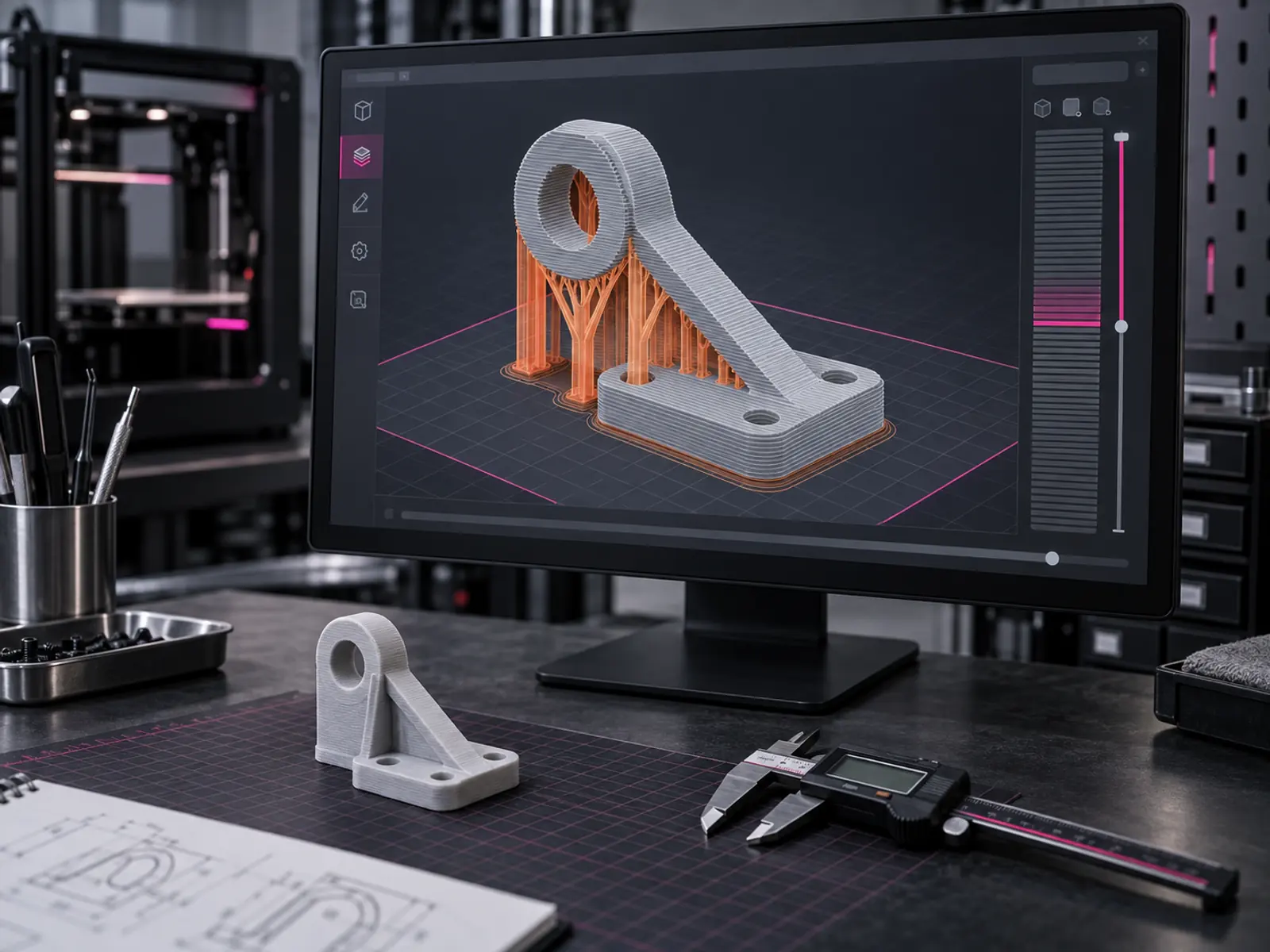
A model that cannot be printed is not a finished deliverable, so the checks happen before handover rather than after a failed print. We look at the file the way the slicer will look at it, and where a feature cannot be printed as drawn, we either change the geometry or tell you why it has to change.
- Minimum wall thickness checked against the material and the nozzle, so a thin wall is a decision rather than an accident.
- Orientation chosen so layer direction runs along the load path instead of across it.
- Overhangs and bridges reviewed, and geometry adjusted where a support would be hard to remove.
- Clearances and hole sizes set for the process, since printed holes come out slightly under size.
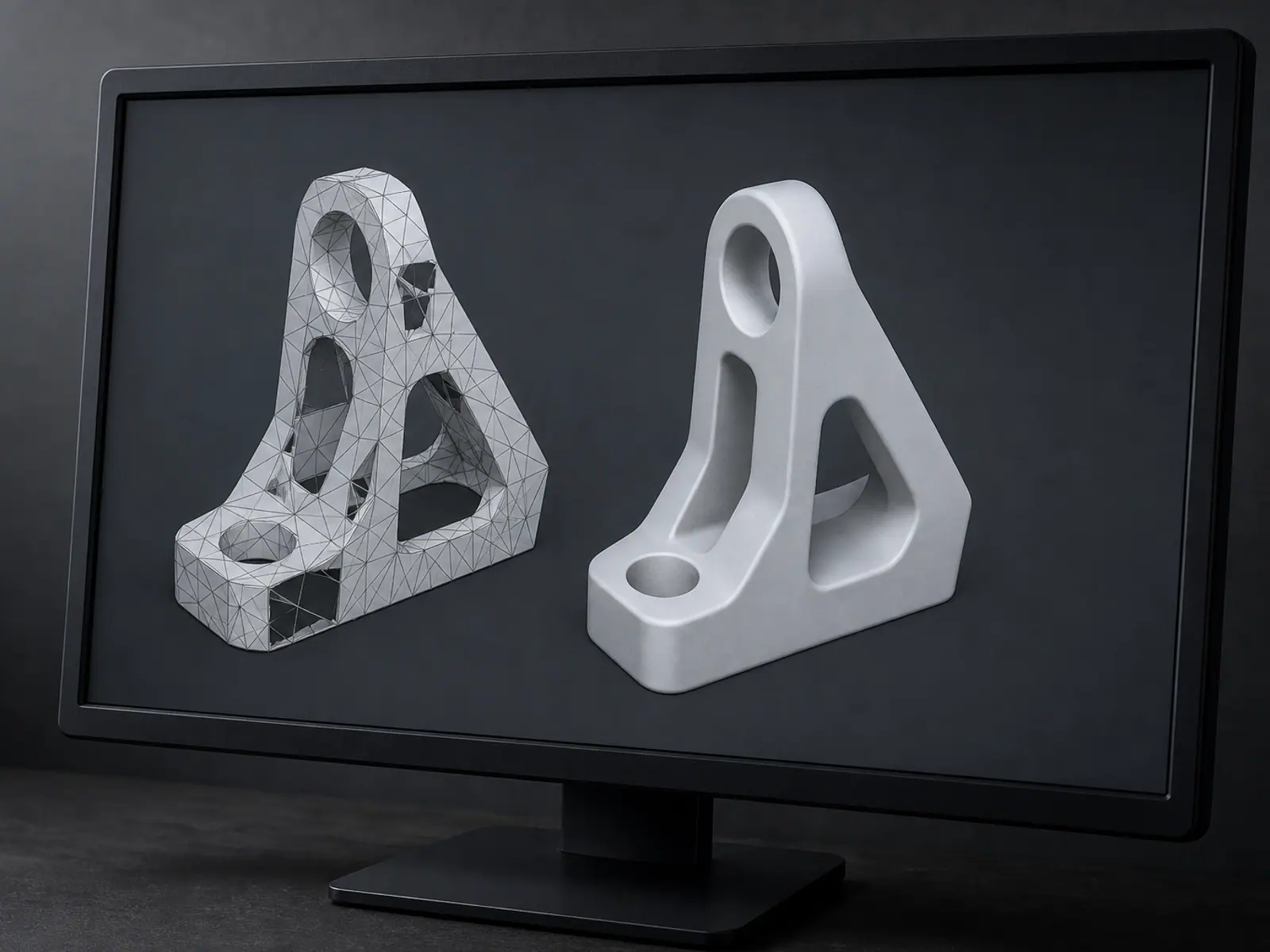
- The mesh checked for a closed, manifold surface so the slicer reports a solid rather than a stray shell.
What you receive, and in which format
The default deliverable is a print-ready STL. Send us the printer and material and we set orientation, thickness and clearances for it; leave those out and the model is built to a general-purpose set of values that may need a second pass. Where the shape has tight or thin detail, 3MF is worth asking for, because it carries the scale explicitly and slices more predictably than a bare STL.
When the project includes it, you also get the parametric source: STEP, and an editable CAD file you can open and change yourself. Prototype printing is available as an optional addition after you have seen the model, and it is quoted as its own line, so declining it does not affect the modelling work.
Say in the enquiry which of the two you need — a file to print now, or a model you can keep editing. It changes what we build, and it is cheaper to agree on it before modelling than after.
Related services
Frequently asked questions
Frequently asked questions
Can I hire you just to make an STL file?
What is the difference between an STL and a CAD file?
I have a mesh someone else made. Can you work from it?
What information do you need from me at the start?
Will the STL print without supports?
Can you scale or resize a model I already have?
An STL Built for Your Printer, Not Just for the Screen.
An STL is a mesh: a surface made of triangles with no dimensions, no units and no feature history. That is why it prints but cannot easily be changed. When you commission a custom STL from us, you get a mesh that is watertight, correctly scaled and oriented for the print process — and where the part will need changes later, we keep it as a solid CAD model as well, so a hole can be moved without rebuilding everything. You can start from a drawing, a photo, a description of what the part has to do, or a rough model you already have. Tell us the printer, the material and the load the part carries; those three answers change wall thickness, orientation and clearances more than any other detail.