
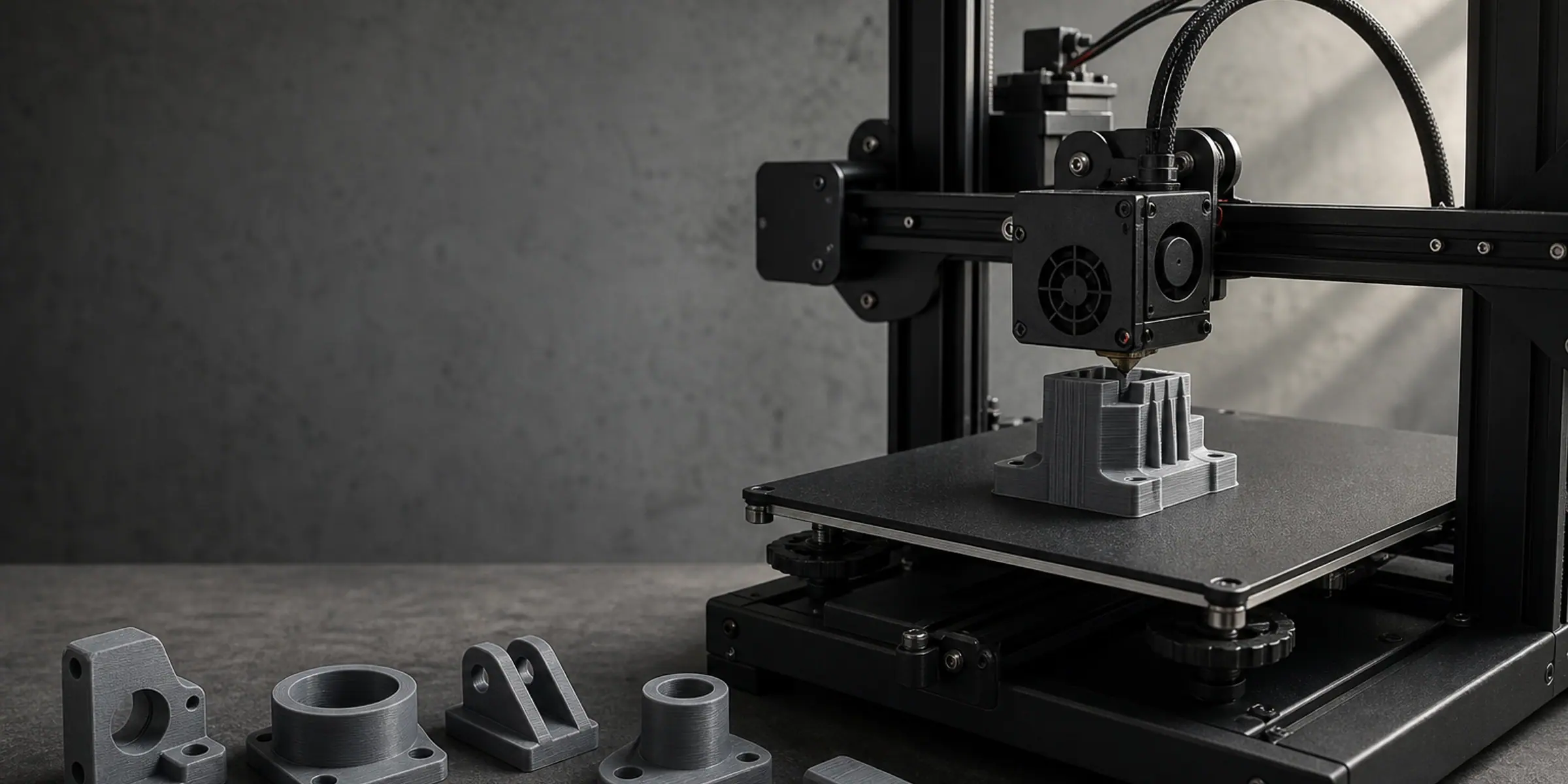
Custom 3D Modeling for 3D Printing
Interior Trim, Mounts, Brackets and Accessory Parts.
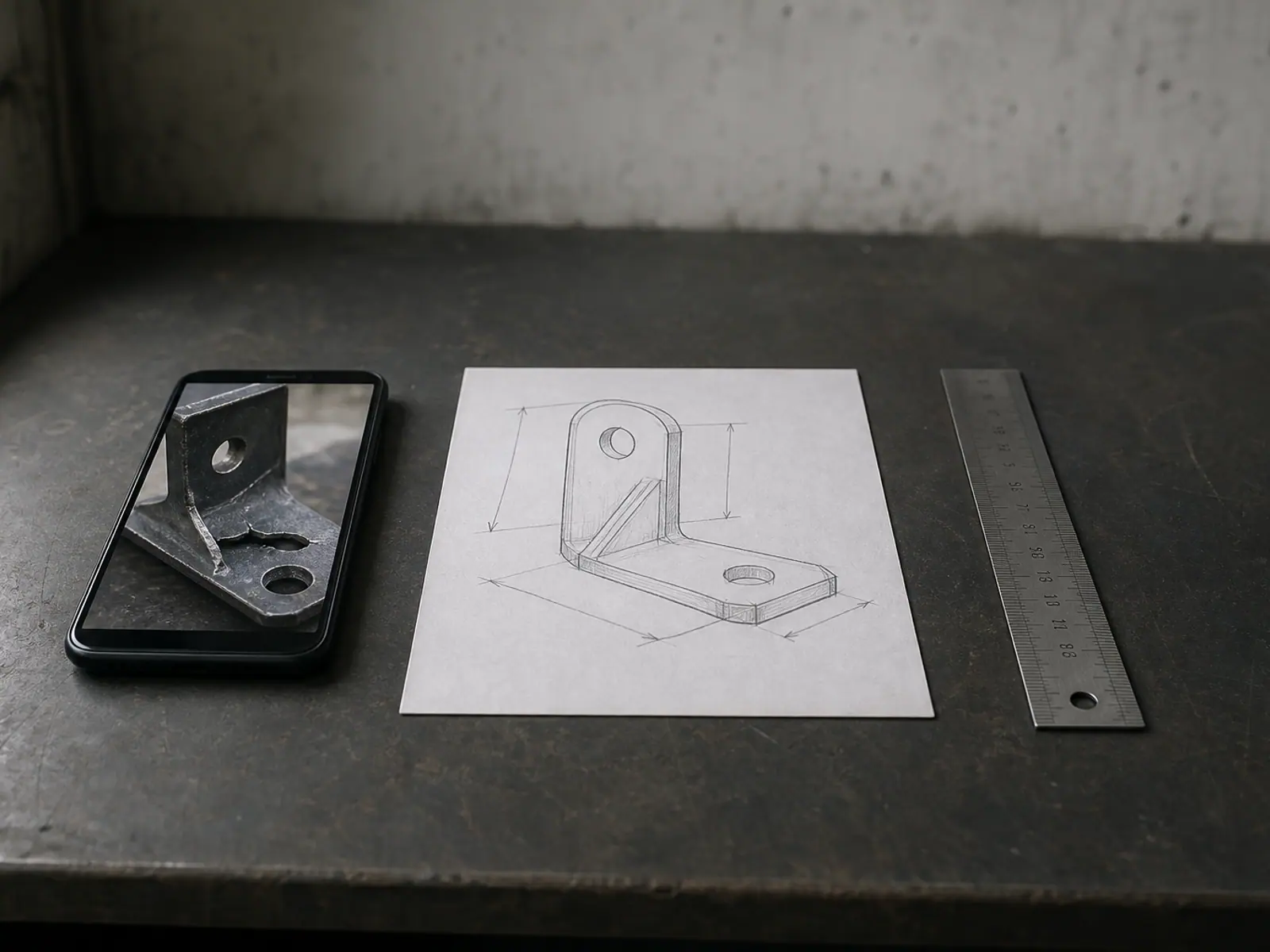
This page covers one corner of the work: automotive interior parts and motorcycle accessories — components that have to fit a vehicle but have nothing to do with how it moves. Broken trim clips, cracked interior panels, lost covers, non-safety mounts, brackets for added accessories, adapters between mismatched fittings and jigs for repeated jobs are everyday requests. Most arrive as a phone photo of the broken part, a sketch with a couple of dimensions, or a fragment that has to be rebuilt from what is left. We model from what you can measure, check that the result will print and fit, and deliver files you can print yourself or have printed for you.
The kind of vehicle parts we model
The work on this page is about fit and function inside a vehicle, not about performance on the road. These are the requests that come up most often, and every one of them is a non-safety part.
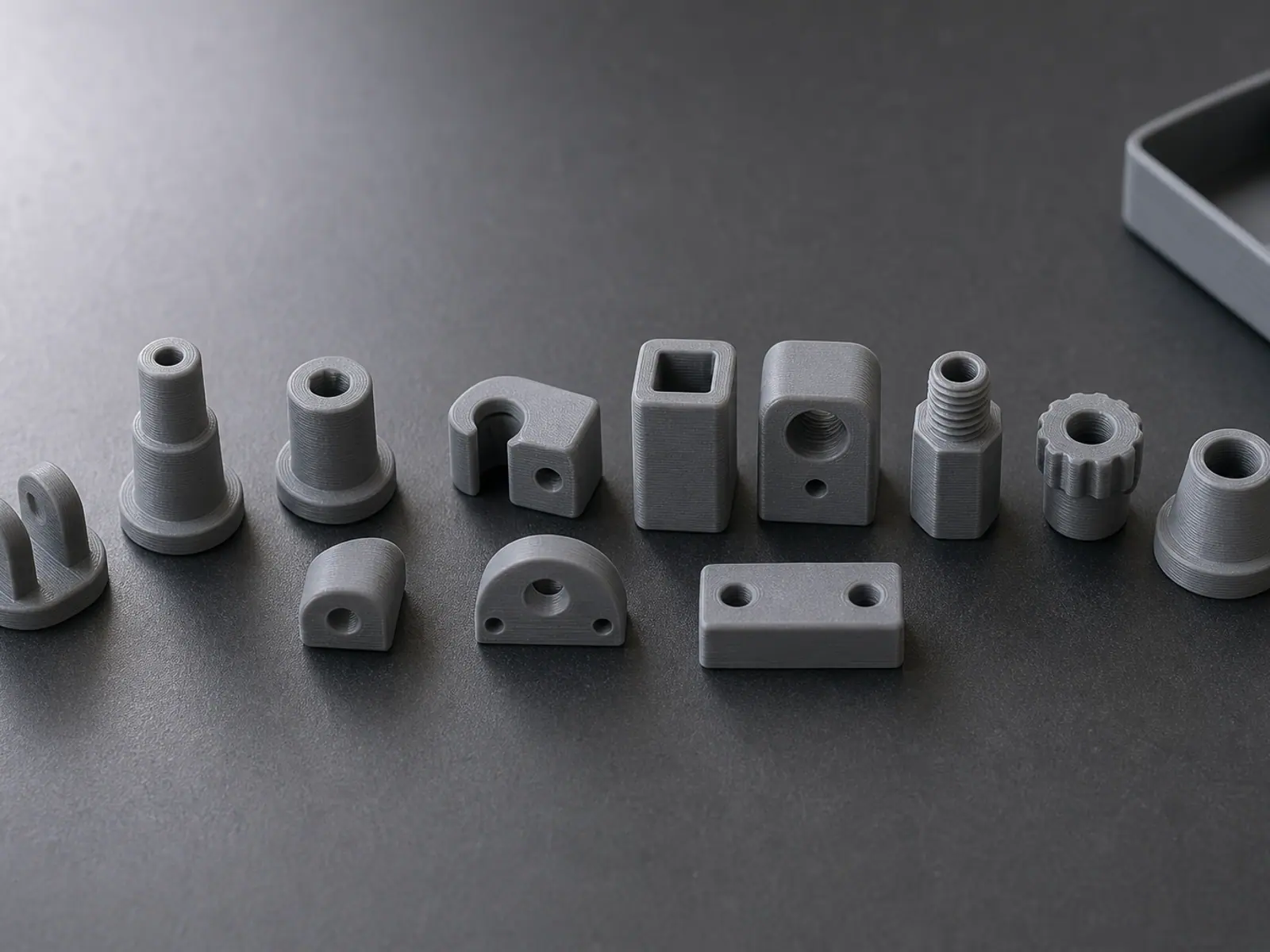
- Interior trim and trim clips — clips, retainers and panel pieces that crack, fall out, or are no longer sold as a separate item.
- Interior panels and covers — cracked or missing covers, caps and small panels that have to line up with holes that already exist.
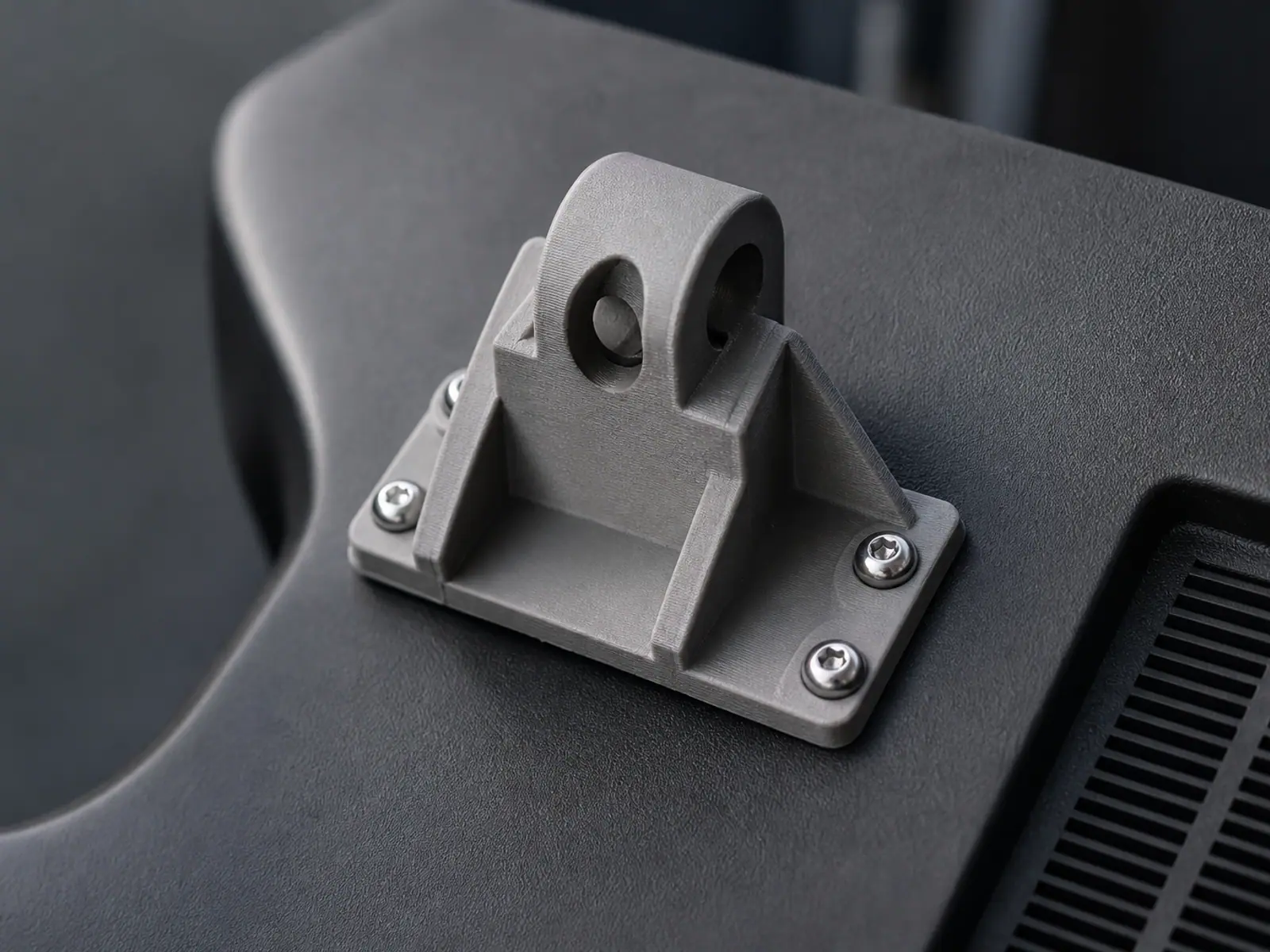
- Non-safety mounts and brackets — mounts for accessories, equipment and added components that fix to points already in the vehicle.
- Adapters between fittings — parts that join two interfaces which were never designed to meet, such as an accessory bracket onto a threaded boss.
- Jigs, fixtures and alignment guides — holding and positioning tools that make a repeated job faster and more consistent.
- Enclosures for added electronics — small cases and housing parts for extra modules and wiring that live inside the cabin or a compartment.
What makes a vehicle part different
Vehicle parts are judged on fit rather than appearance. A trim clip that is half a millimetre too wide will not seat; a bracket that is correct in every dimension except hole spacing is scrap. That is why the measurements that matter are the ones taken from the vehicle itself — hole centres, the thickness of the panel a clip presses into, and the clearance left for movement.
The second difference is the environment. Parts inside a vehicle live with constant vibration and large temperature swings, and cabin parts also see sunlight. That shapes both the material and the print orientation, which is why we ask whether the part is decorative, load-bearing, or simply a cover. The answer changes how it is built.
None of this concerns how the vehicle behaves on the road. We model interior trim, covers, non-structural brackets, mounts, adapters, jigs and enclosures. Brake, steering, suspension and occupant-restraint components are not something we model or print — those belong to the vehicle manufacturer or a qualified specialist, and we will decline that work.
How a request runs, from photo to fitted part
- You send what you have — photos of the part in place, the broken pieces, a sketch showing hole spacing or overall length, or the old part itself if it can be posted.
- We review it and tell you which vehicle measurements are actually needed and which can be read from the photographs, and we say plainly if something essential is missing.
- You get a project price for the modelling. Printing, if you want it, is quoted as a separate line so the two costs never blur together.
- We build the model to the measured interfaces, with wall thickness and reinforcement set for the load the part carries and the direction that load arrives from.
- We verify it — thickness, overhangs, clearances, fits and watertightness are checked, and the print orientation is fixed before the file is released.
- You fit it — take the files and print locally, or have a prototype printed, test-fitted on the vehicle, and revised from that test fit.
Process, orientation and material, in plain terms
The same geometry printed in two directions behaves differently, so material and orientation are decided together with the part, not chosen from a menu at the end.
What the part has to do decides how it is made — the table below is how those decisions are usually framed.
| What the part has to do | Usual approach |
|---|---|
| Decorative interior trim | A clean print with light post-processing, chosen for surface finish rather than strength. |
| Cover or cap carrying almost no load | Moderate wall thickness and a simple orientation, so it prints quickly and fits first time. |
| Mount or bracket carrying a load | Thicker section where the load enters, reinforcement along the load path, and an orientation that puts layer lines across the load rather than along it. |
| Part sitting in heat or sunlight | Material and wall thickness chosen for the environment, with the expected finish agreed before printing. |
| Jig or fixture for repeat work | Flat, stable geometry with clamping features, prioritising repeatability over appearance. |
What we do not take on
Some parts we will not model, and it is better to say so here than after an enquiry has been sent. Brake, steering, suspension and occupant-restraint components are outside our scope. Those parts are designed, tested and approved by the vehicle manufacturer or a qualified specialist, and a printed substitute has no place in them.
We also decline jobs where the only available information would be a guess. If nothing can be measured and no reliable reference part exists, we will tell you that we cannot model it, rather than producing a file that looks convincing and fits nothing.
If you are unsure whether your part is in scope, send a photo and ask — the answer costs nothing.
Related services
Frequently asked questions
Frequently asked questions
Can you model a part photographed while it is still fitted to the vehicle?
Do you model parts that the manufacturer no longer supplies?
Which materials suit parts that live inside a vehicle?
Can you print the part as well as model it?
Are printed parts strong enough for use inside a vehicle?
How accurate do my measurements need to be?
Interior Trim, Mounts, Brackets and Accessory Parts.
This page covers one corner of the work: automotive interior parts and motorcycle accessories — components that have to fit a vehicle but have nothing to do with how it moves. Broken trim clips, cracked interior panels, lost covers, non-safety mounts, brackets for added accessories, adapters between mismatched fittings and jigs for repeated jobs are everyday requests. Most arrive as a phone photo of the broken part, a sketch with a couple of dimensions, or a fragment that has to be rebuilt from what is left. We model from what you can measure, check that the result will print and fit, and deliver files you can print yourself or have printed for you.